

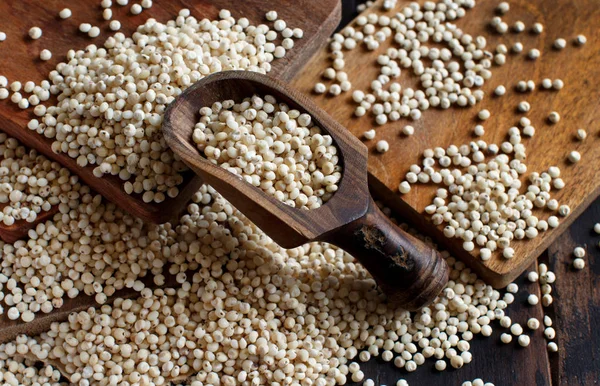
As part of its attempts to enhance the supply of coarse grains through ration stores and other welfare schemes, the Centre has permitted state governments to distribute Jowar and Ragi within 6 and 7 months, respectively, from the end of the procurement period, as opposed to 3 months previously.
According to an official statement from the Union Food Ministry, the government of India has amended the guidelines for procurement, allocation, distribution, and disposal of coarse grains dated March 21, 2014, and December 26, 2014. The 2014 rules governed the procurement of coarse grains, allowing governments to purchase coarse grains from farmers at MSP through the central pool. This was contingent on the Government of India’s earlier approval of a thorough procurement plan submitted by states in collaboration with the Food Corporation of India.
The entire quantity was to be distributed within three months of the completion of the purchase period, according to the 2014 standards.
“These guidelines have served the objective of encouraging states to purchase coarse grains. This may be seen in the rising trend in coarse grain purchase during the last three years.
“However, it was seen that several State Governments were facing issues with regard to the coarse grain distribution term, which was 3 months each for procurement and distribution activity, irrespective of the commodity’s shelf life,” the statement stated.
Discussions with various stakeholders were held to alleviate challenges faced by some states in the procurement/distribution of coarse grains and to increase procurement of coarse grains under the central pool.
The Centre has modified the 2014 guidelines based on discussions with stakeholders. The food ministry stated, “The distribution duration for Jowar and Ragi has been expanded to 6 and 7 months, respectively, from the previous period of 3 months.”
It claimed that this would enhance jowar and ragi procurement and consumption since the state would have more time to distribute these commodities through the Target Public Distribution System (TPDS) and other welfare schemes.
The provision of inter-state transportation of surplus coarse grains through FCI is introduced, according to the ministry, to account for advance demand put by the consuming state before procurement begins.
“Through the Public Distribution System, new recommendations would promote coarse grain purchase and consumption (PDS). Because these crops are typically cultivated on marginal or unirrigated land, increased cropping would promote sustainable agriculture and crop diversification “According to the statement.
The number of farmers who benefit from the procurement of these crops will expand as a result of the increased procurement.
“The procurement and then distribution of millets at Rs 1 per kg will benefit marginal and poor farmers who are also PDS beneficiaries. “Regional coarse grains can be supplied for local consumption, minimizing wheat/rice transportation costs,” according to the statement.
Coarse grains are rich in nutrient, non-acidifying, gluten-free, and provide dietary benefits. Furthermore, the consumption of coarse grains would help to strengthen our fight against malnutrition in children and adolescents.