

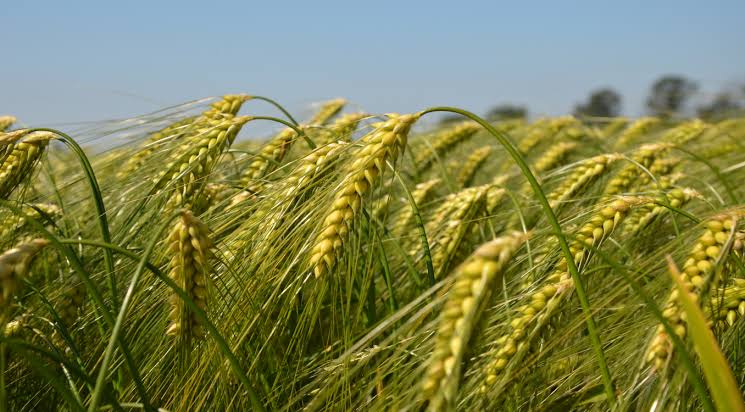
Despite the pandemic blues, India’s robust agriculture industry produced record foodgrains this year, but the repeal of three agri-reform laws and a surge in cooking oil prices put a shadow on the country’s strong agriculture sector, which is on track for a greater harvest in 2022.
While the increased production of foodgrains, which enabled the government to provide free additional rations to COVID-affected poor families for several months, was a welcome relief, the year will be remembered for the long-running farmers’ protests at Delhi’s borders against the three laws and their subsequent repeal.
In the current financial year, which ends in March 2022, the Indian agriculture industry, which was one of the few sectors that remained resilient during the pandemic gales, is predicted to rise at a pace of 3.5 percent.
Foodgrain output reached an all-time high of 308.65 million tonnes in the 2020-21 crop year, which ended in June. In the current crop year, production could surpass 310 million tonnes.
For the benefit of farmers, the government acquired large quantities of wheat, rice, pulses, cotton, and oilseeds at the Minimum Support Price (MSP).
Paddy and wheat procurement set new highs in 2020-21, with 894.18 lakh tonnes and 433.44 lakh tonnes, respectively. According to official data, pulses were purchased in the amount of 21.91 lakh tonnes, coarse grains in the amount of 11.87 lakh tonnes, and oilseeds in the amount of 11 lakh tonnes.
While production and procurement went on as usual, the farmers’ strike, which began in November 2020, came to an end this month when Parliament enacted a bill repealing three disputed farm legislation on the first day of the Winter Session on November 29. The Supreme Court had already halted the laws’ implementation in January.
Farmers’ unions are celebrating their win after the Centre agreed to their demands. Economists and government officials, on the other hand, perceive it as a setback in the implementation of agricultural marketing system changes.
On the merits of these three legislation, the jury is yet out.
“The implementation of the three farm reforms was expected to assist one-fifth of the country’s farmers. We utterly squandered the chance. However, I believe this is merely a temporary setback “Ramesh Chand, a member of the Niti Aayog, told PTI.
According to the Niti Aayog member, if agricultural regulations were applied, “It would have gone a long way toward achieving the goal of doubling farmers’ income. The introduction of farm legislation had been linked to a nearly 20% rise in income “.
The three legislation, which were passed by Parliament in September 2020, were intended to provide farmers more marketing freedom outside of notified mandis. Other major goals were creating a framework for contract farming and simply regulating the supply of vital commodities in exceptional circumstances.
According to Chand, the agricultural sector’s overall performance has been strong this year. “The agricultural growth rate is unaffected. By the end of March 2022, we predict a 3.5 percent growth rate in agriculture, which is the same as last year “he stated
The agriculture sector was able to maintain its growth pace thanks to record production of food grains.
According to Agriculture Commissioner S K Malhotra, the country’s foodgrain production in the 2021-22 crop year could reach 310 million tonnes (July-June). The boost in production has been supported by good monsoon rains, the adoption of new technology, and the successful implementation of government programmes such as PM-KISAN.
Crop productivity is improving, according to Malhotra, as farmers embrace improved seed varieties that produce higher yields and are high in nutritional content, as well as being resistant to diseases and bad weather conditions.
Unseasonal rains also harmed perishable and horticulture produce in various sections of the country, according to the official. As a result, some goods, such as tomatoes, saw their prices fall. On global signals, edible oil prices rose to historic levels despite robust supply of oilseed crops.
Imports, which soared to a record Rs 1.17 lakh crore in the 2020-21 season, ended October, cover around 60-65 percent of India’s local demand for edible oils. The price of mustard oil has risen to roughly Rs 200 per litre, and other cooking oils have also increased in price.
The government decreased import levies on palm oil and other oils many times this year to lower domestic prices, but rates remain high. The government also outlawed futures trading in numerous commodities and placed stockholding limits on traders and distributors to keep prices under control.
A substantial increase in rabi oilseeds acreage has fueled expectations for a drop in cooking oil costs in the coming year.
Among other developments, co-operative major IFFCO launched nano-urea in liquid form that promises to reduce India’s import as well as subsidy bill.
“We started producing nano urea commercially and we have so far produced 1.5 crore bottles of nano urea which helped save Rs 6,000 crore of government’s subsidy,” IFFCO MD U S Awasthi said and urged the government to support production of such innovative products.
2021 also saw huge investments in agritech startups that are working in the area of farm advisory, provisions of inputs and marketing support among others. New technologies like drones are being used in the farm sector.
The government has already announced the setting up of a committee to address the key demand of protesting farmer unions — a legal guarantee for Minimum Support Price (MSP) regime.
Hopefully, an amicable solution on the MSP issue is expected in the New Year.