

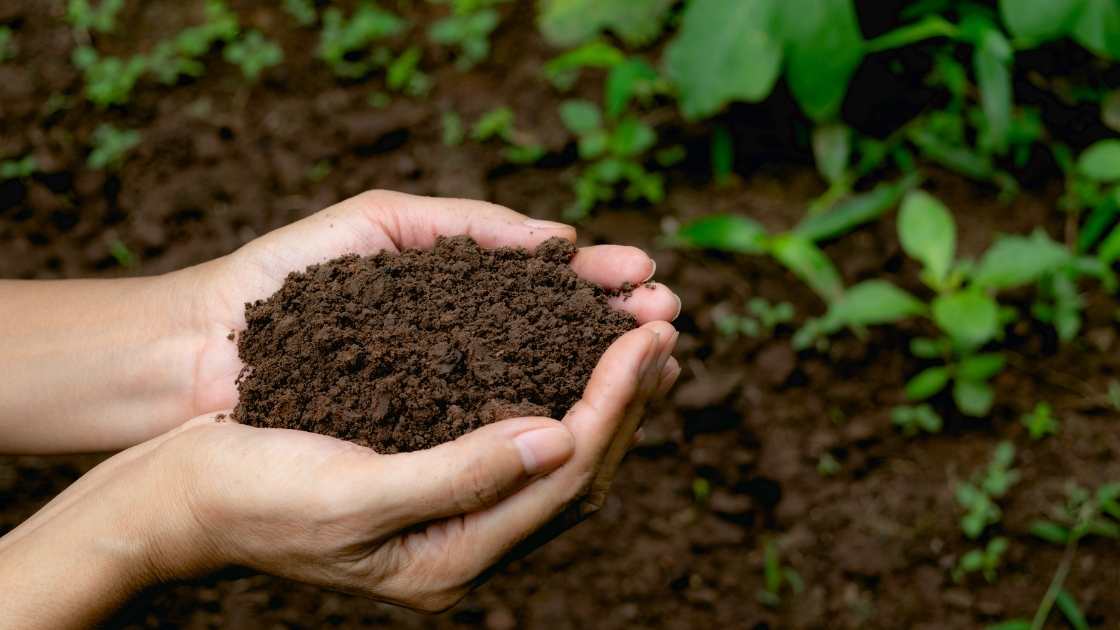
“The skin of the Earth,” soil, both grabs and throws away carbon, usually in the form of carbon dioxide or methane. In fact, soil emits “billions of tons” of carbon each year.
Most soil takes in pretty much the same amount of carbon as it releases, she finds. The carbon in soil comes from leaves and other matter that fall from trees. Over time, that debris will break down to become building blocks of humus.
We still need to help things along, however. Floods, crop harvests, tree removals and weeding all remove nutrients from soil. Constructing buildings atop soils also disturbs their structure. Such actions can release carbon dioxide (CO2) from the soil, adding it to the greenhouse gases in the air. If those CO2 releases get too high, they will contribute to making the planet warmer each year, essentially giving it a fever.
“Soil is a reservoir of carbon,” he explains. If we increase its health and use it well, it will absorb more carbon from the air than it releases as CO2. Then it — and the trees growing in it — will actually store carbon, perhaps for centuries or longer.
We can help by limiting soil disturbance. When floods and other processes expose parts of soil to microbes, the tiny organisms that break down organic matter in soil will release extra CO2 into the air.
Farmers regularly till their fields to break up compacted soil, to control weeds and to help mix nutrients into the soil. But this can lead to erosion, as tilling destroys the soil’s natural structure. Tilling also can harm organisms that call the soil home. We can keep soil a bit safer from hungry microbes if we reduce tilling or plowing the soil. With tilling, “we break up what’s in the soil into bite-size pieces,”. This exposes those bits to microbes that can feast on all that exposed carbon.
That’s why many farmers now try to limit tillage. They keep at least one-third of the crop residues (the stems and roots of crop plants) in the soil after harvest until it’s time to plant again. Known as “conservation” tillage, it helps conserve the soil’s structure and below-ground inhabitants.
In December 2019, Jillian Deines was part of a team at Stanford University in California that reviewed satellite images taken between 2005 to 2017. They showed corn- and soybean-growing regions spanning nine midwestern states. Farmers that used conservation tillage tended to have bigger harvests. Harvests were, on average, about 3.3 percent higher for corn and three-fourths of a percent higher for soybeans. And the effects were biggest for farms that had used this low-till practice the longest.
But better crop yield was not the only benefit. Reducing tillage also led to healthier soils, the study found. Farmers even spent less money growing their crops on these soils.
Created By :- Banirupa Patra