

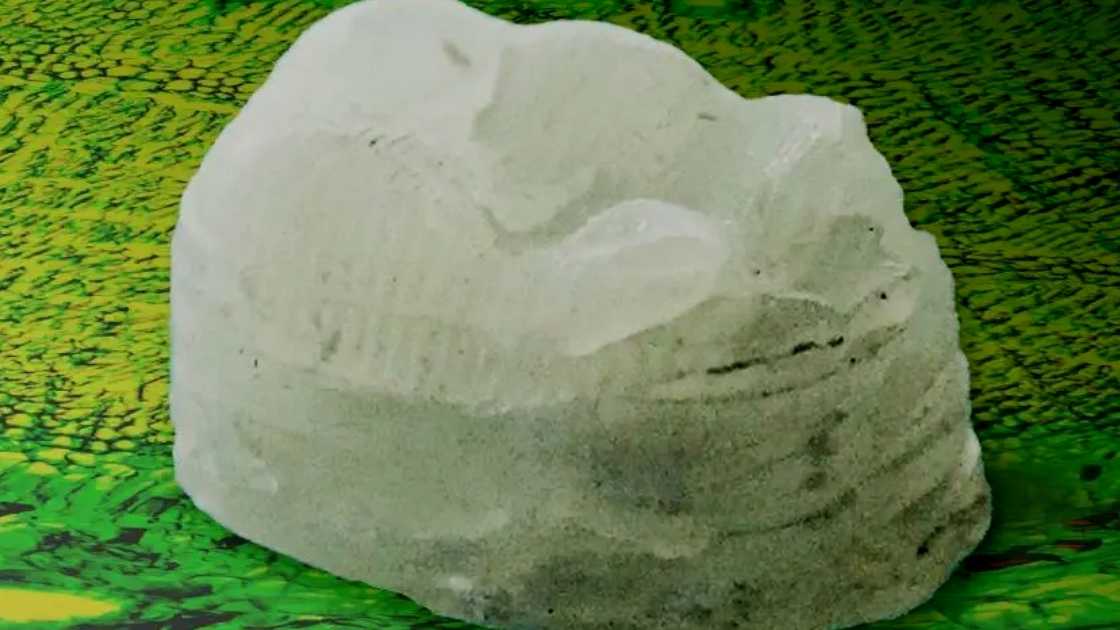
cellulose fibres, the most abundant polymer in nature and the basic structural component of all plants and algae, make form a single wood cell wall. Within each fibre, reinforcing cellulose nanocrystals, or CNCs, are chains of organic polymers structured in nearly flawless crystal patterns.
At the nanoscale, CNCs are stronger and stiffer than Kevlar. If the crystals could be formed into materials in significant fractions, CNCs could provide a road to stronger, more sustainable, biologically generated polymers.
A team from MIT has created a composite made mostly of cellulose nanocrystals with a minor quantity of synthetic polymer. The organic crystals account for 60 to 90% of the material, the highest percentage of CNCs yet found in a composite.
The cellulose-based composite was found to be stronger and tougher than some types of bone, as well as harder than ordinary aluminium alloys, according to the researchers. The material features a brick-and-mortar microstructure that resembles a mollusk nacre, which is the hard inner shell lining.
The team came up with a recipe for a CNC-based composite that they could make with 3D printing and traditional casting. They used penny-sized bits of film to evaluate the material’s strength and hardness after printing and casting the composite. They also shaped the composite into the shape of a tooth to demonstrate how it may be used to create stronger, tougher, and more sustainable cellulose-based dental implants- or, for that matter, any plastic product- in the future.
“We can provide polymer-based materials mechanical capabilities they never have before by producing composites with CNCs at high loading,” says A. John Hart, professor of mechanical engineering. “It’s potentially better for the earth as well if we can replace some petroleum-based plastic with naturally derived cellulose.”
Hart and his colleagues included Abhinav Rao Ph.D. ’18, Thibaut Divoux, and Crystal Owens SM ’17 published their findings in Cellulose today.
More than 10 billion tonnes of cellulose are generated each year from plant bark, wood, and leaves. The majority of this cellulose is used to make paper and textiles, with a small amount being powdered for use in food thickeners and cosmetics.
Cellulose nanocrystals, which may be isolated from cellulose fibres via acid hydrolysis, have been studied by scientists in recent years. Natural reinforcements in polymer-based materials could be made from incredibly strong crystals. However, due to the crystals’ tendency to agglomerate and only weakly bind with polymer molecules, researchers have only been able to incorporate small fractions of CNCs.
Hart and his colleagues wanted to create a composite that had a high percentage of CNCs and could be shaped into robust, long-lasting forms. They began by combining a synthetic polymer solution with commercially available CNC powder. The team calculated the right amount of CNC and polymer to transform the solution into a gel that could be placed into a mould to be cast or fed through the nozzle of a 3D printer. They broke up any clumps of cellulose in the gel with an ultrasonic probe, making it more probable for the scattered cellulose to form strong links with polymer molecules.
They created some of the gel on a 3D printer and poured the rest into a mould to be cast. After that, the printed samples were allowed to dry. During the technique, the material was decreased, leaving a solid composite consisting primarily of cellulose nanocrystals.
“We just disassembled and reassembled wood,” Rao explains. “To produce a novel composite material, we reassembled the best components of wood, which are cellulose nanocrystals.”