

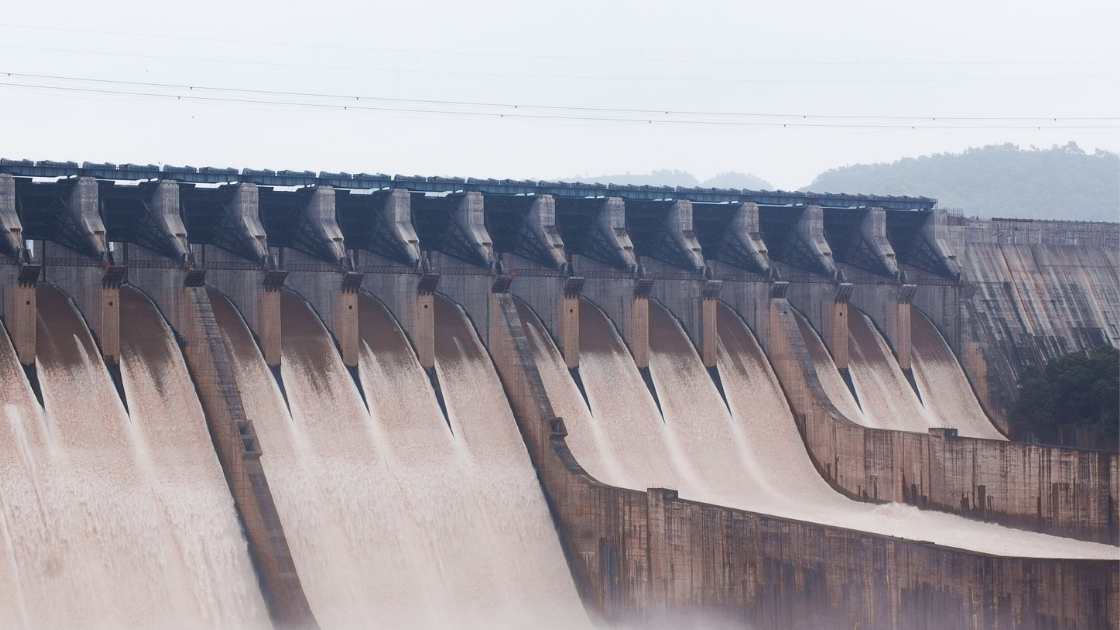
The construction of the second unit of the Arun-III hydropower project’s powerhouse, which is being developed by state-owned SJVN, has begun, according to Union Power Secretary Alok Kumar. According to a company statement, SJVN Chairman and Managing Director Nand Lal Sharma accompanied Power Secretary Alok Kumar to the 900-MW Arun -III Hydro Electric Project in Nepal.
During his visit, the electricity secretary broke ground on the second unit of the Arun-III project’s powerhouse.
Kumar was intrigued by the ongoing construction activity at the Power House Site, Head Race Tunnel, and Dam Site. He was ecstatic about the rapid progress made by the highly motivated and dedicated SJVN and SAPDC teams.
He stated that the project’s completion by FY 2023-24 will be a significant milestone in SJVN’s capacity-building efforts and will further deepen the Indo-Nepal friendship.
On this occasion, Sharma expressed his heartfelt gratitude to the governments of India and Nepal for recognizing SJVN’s contribution to the power sector and entrusting the company with the construction of the 900 MW Arun-III HEP, 669 MW Lower Arun HEP, and 217 KM 400KV Double Circuit Transmission Line-up to the Nepal-India Border, as well as the associated Dhalkebar substation.
He also thanked Power Minister R K Singh and the Ministry of Power for their unwavering support and leadership.
SJVN is a development partner in the Indo-Nepal Hydropower Development, according to Sharma. The project will bring in investment, infrastructure, and community development, as well as better education and healthcare facilities, numerous job possibilities, a boost to local businesses, and skill development for the local population.
The initiative will usher in a new era of regional wealth and development, as well as strengthen bilateral ties between the two countries. The organization has broadened its horizons across India and overseas, and has added numerous projects to its portfolio. SJVN is on track to meet its agreed goal of 5,000 MW installed capacity by 2023, 25,000 MW by 2030, and 50,000 MW installed capacity by 2040.
Water has long been used to power industrial and agricultural operations by capturing the energy that flows downhill as it flows. Flour mills, for example, used flowing stream water to turn a waterwheel and mechanically drive flour grinders.