

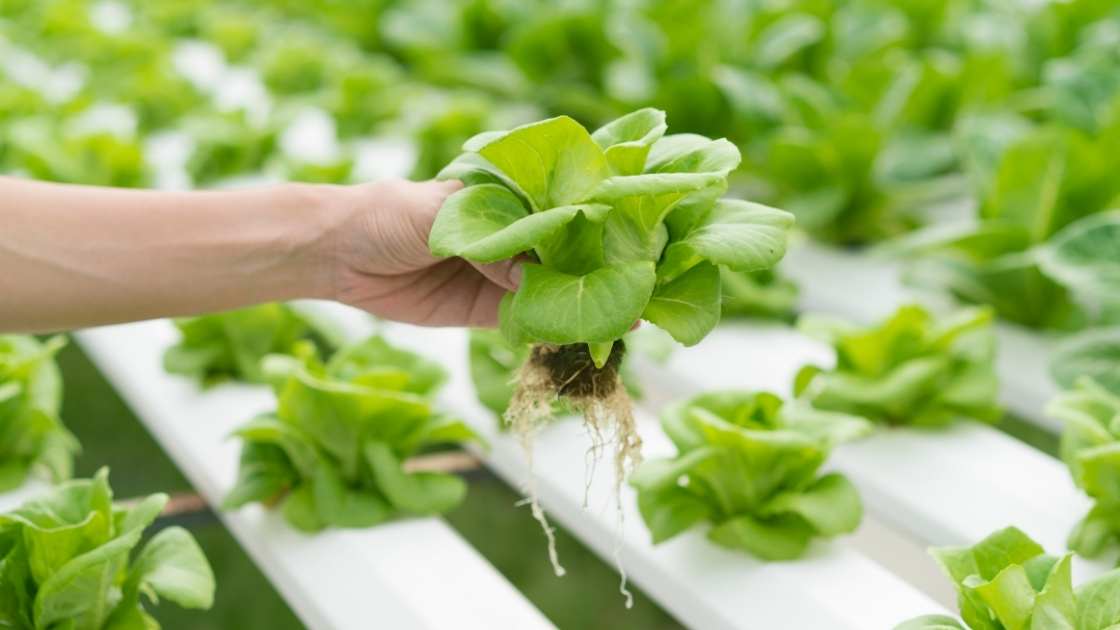
A group of students from Ernakulam’s Federal Institute of Science and Technology (FISAT) developed a nutrition formula for hydroponics farming that increases yield threefold while using less water and fertilizer. The initiative, which began in 2019, was spearheaded by three assistant professors: Mahesh C, Bejoy Varghese, and Rajesh TR. Even after the pandemic, they continued to experiment by establishing a micro farm. The team is now growing a variety of vegetables on 1.5 acres of leased land near the college.
With the help of IIT Bombay, the team began experimenting on the topic of “application of robotics in agriculture” as part of a central government project called the E-yantra Farm Setup Initiative (EFSI).
“In 2017, we got a well-equipped lab and conducted many successful trials with smart agriculture concepts.”Two years later, the idea of hydroponics farming, which is popular in America and Europe, struck us,” says Bejoy, an assistant professor in the department of electronics and communication engineering.
The basic principle of hydroponic farming is to produce as much as possible with the least amount of space and raw materials. In this regard, engineering students and lecturers are attempting to help farmers in achieving higher yields, thereby finding a way to feed Kerala’s rising population without relying on other states.
“Almost all of Kerala’s districts are densely populated, and there is no possibility of finding additional farmland. All we could do was boost production from current regions while avoiding soil degradation and prioritizing customer health by solely using organic fertilizers. Using the hydroponics technology will help with that,” says Mahesh, an assistant professor in the computer science engineering department.
The expense of putting up this technology is often high, but the FISAT team claims that their nutrition formula will require far less investment.
“The cost will be determined by the variety of vegetables and available space,” says team leader Bejoy.
“20 students are working in the study, development, and implementation of this technology,” explains Ardra Saji, a final year electrical and electronics student and an active member of the team.
“We intend to divide into groups to provide training to interested farmers. Basic technical expertise is required for the installation, which can be easily gained through such training.”
Bejoy warns that if the technology is used without proper guidance and training, it will harm farming.
“Many YouTube videos describe this form of farming, in which fertilizers are transported using PVC pipes. Not only will it have terrible effects on the plant, but it will also have serious consequences on our health,” he added.
“After seeing our production from the previous two years, several farmers have approached us. It would provide the best practical experience for pupils. We, engineers, thrive on integrating technology into regular activities to make life easier,” says the pleased teacher.
In a few days, the team, which includes 17 students from the E-yantra project and 21 from the IEEE SIGHT (Special Interest Group on Humanitarian Technology), will harvest their fourth batch of crops.