

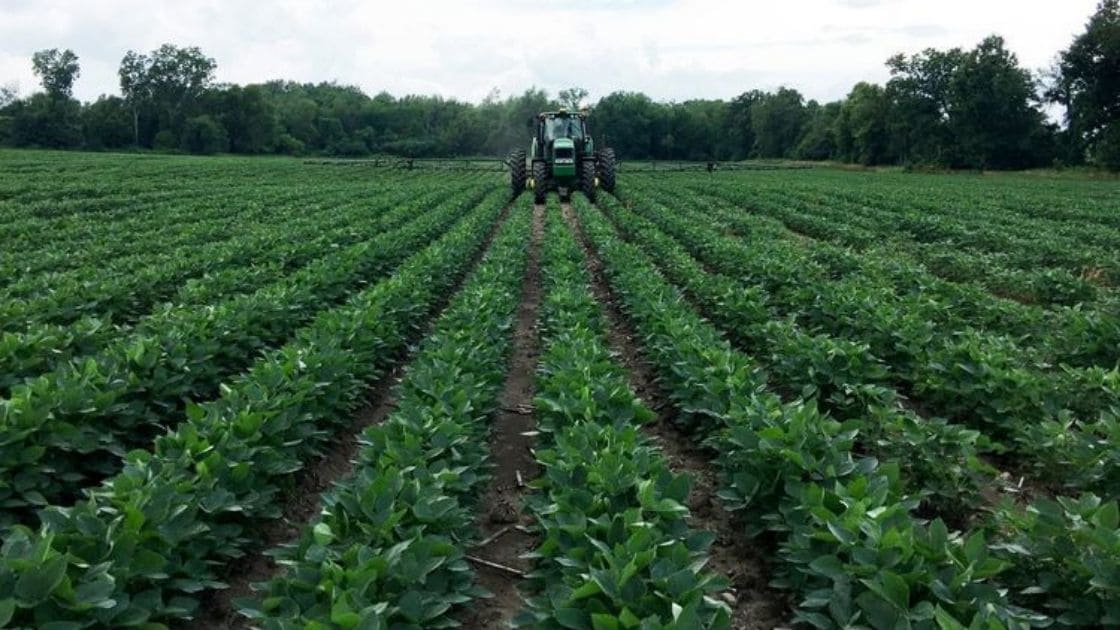
While previous studies have shown little economic benefit associated with using foliar fungicides in soybean as a preventive measure, new research aided by a Penn State plant pathologist suggests otherwise, especially in southern regions. The findings will help growers in the U.S. understand how foliar fungicides—applied to leaves—fit into overall soyabean production practices, noted Paul Esker, associate professor of epidemiology and field crop pathology in the College of Agricultural Sciences, who collaborated with Denis Shah, associate scientist in the Department of Plant Pathology, Kansas State University. Soybean is one of the major crops produced in the U.S., planted on an estimated 87.6 million acres in 2020. Esker explained that success in growing soybean depends on multiple management decisions, including choice of cultivar, sowing date, seeding rate, nutrient fertilization, irrigation, drainage, crop rotation and tillage.
Foliar fungicides—used to prevent fungal plant diseases such as frogeye leaf spot and brown spot—are another management consideration. These diseases can flourish when temperatures are warm with humid conditions, such as those that occur in regions known for producing soybean. These fungal diseases have the potential to impact crop health and yield. Previous field trials have demonstrated that when there is little or no disease present, there is no economic benefit to using foliar fungicides, Shah and Esker explained. Despite that information, the use of foliar fungicides in U.S. soybean production almost tripled from 2005 to 2015. “Foliar fungicides should not be applied indiscriminately, divorced from disease scouting or forecasting, integrated pest management, and environmental principles,” Esker said. “The price to be paid in terms of environmental damage and loss of product efficacy due to the evolution of fungicide resistance within foliar pathogen populations should be weighed against the yield penalty associated with not using foliar fungicides in high-yield environments.”
To better understand the contribution of foliar fungicides to soybean yield from an economic standpoint, the team used a machine-learning algorithm to analyse soybean yields based on production practice information reported by growers in 2014–16. The researchers, who recently reported their results in Scientific Reports, found that the two most important factors associated with soybean yield were latitude and sowing date. Foliar fungicide use ranked seventh out of 20 factors in terms of relative importance. Delayed sowing at higher latitudes decreased yield by about 15 bushels per acre compared to the highest-yielding fields sown early in the more southerly locations, mainly in Illinois and Iowa.