

A NABARD study has found hydroponics-grown seedlings of paddy produce tillers vigorously, recover fast, mature uniformly, and have a higher yield, use 95 percent less water, and tolerate delayed monsoon conditions well. Rajesh Aggarwal, MD, Insecticides India.
Even though agriculture has been the source of nutrition since time immemorial, in the past few decades its reputation has been riddled with accusations of depleting natural resources. As the world gears up to house about 9.8 billion people by 2050, it stares at increasing food production by at least 70 percent. Globally, owing to unsustainable irrigation practices, 70 percent of available water on earth is used for agricultural production. About 38 percent of earth’s land, except for the frozen parts, is used for growing food and by 2050, an estimated 593 million hectares of land, double the size of India, will be needed to meet the projected calorie needs of the global population. Therefore, it is feared that many ecosystems may vanish and manmade disasters such as deforestation and climate emergency may aggravate. In turn, the pursuit for food may end up threatening food security, especially in dry or water-stressed countries like India. Considerations like these are the driving force behind emergence of sophisticated and water-smart technologies such as hydroponics.
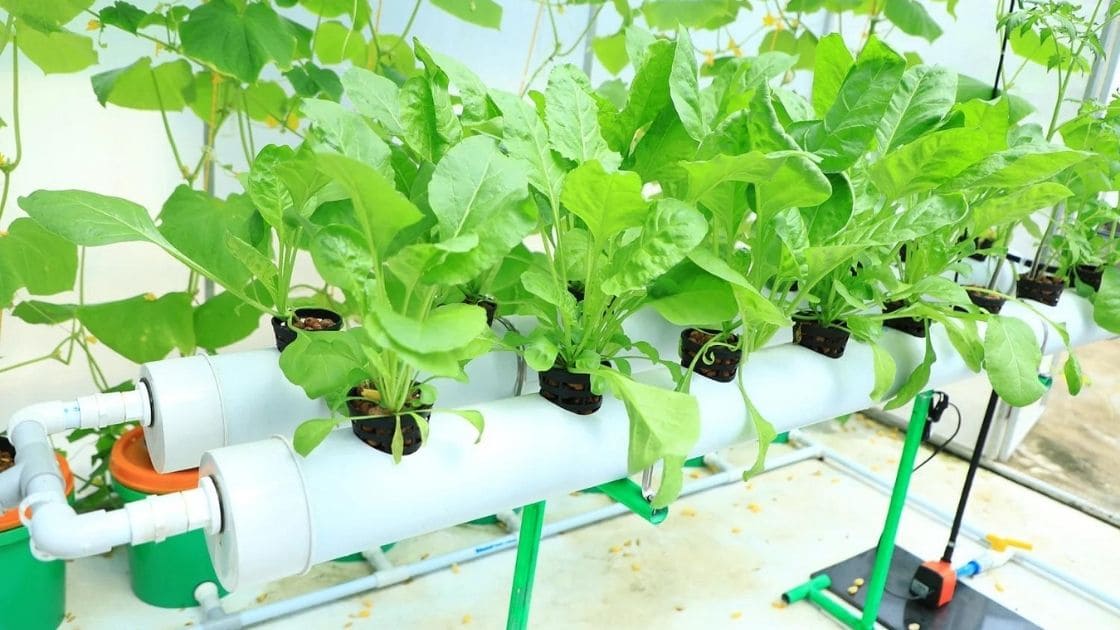
Hydroponics is a subset of hydro culture and a type of controlled environment agriculture (CEA) in which seeds are planted in non-soil mediums for growth such as coconut husk, LED lighting meets the energy needs, and nutrient-infused water is absorbed by the plant roots and circulated to the rest of its parts. While the actual process is believed to be the basis of the historical Hanging Garden of Babylon, the modern-day concept was developed by a German botanist Julius Sachs in the 19th century. He examined differences between plants grown in soil and those grown in water to find that plants only needed the nutrients derived from microorganisms that live in the soil, and not the soil itself, to grow. Sachs published the “nutrient solution” formula for growing plants in water in 1860, which set the foundation for hydroponics, as we know it today. He identified that plants take nutrients like copper, calcium, manganese, zinc, sulphur, iron, chlorine, nitrogen, phosphorus, potassium, boron, molybdenum, and magnesium from water and carbon, oxygen, and hydrogen from air.
However, it was in 1937 when an American scientist, Dr. WE Gericke described how this method could be used for agricultural purposes. Scientists found that the fluid dynamics of water changed the architecture of plant roots, allowing them to absorb nutrients more efficiently than soil-grown plants.