

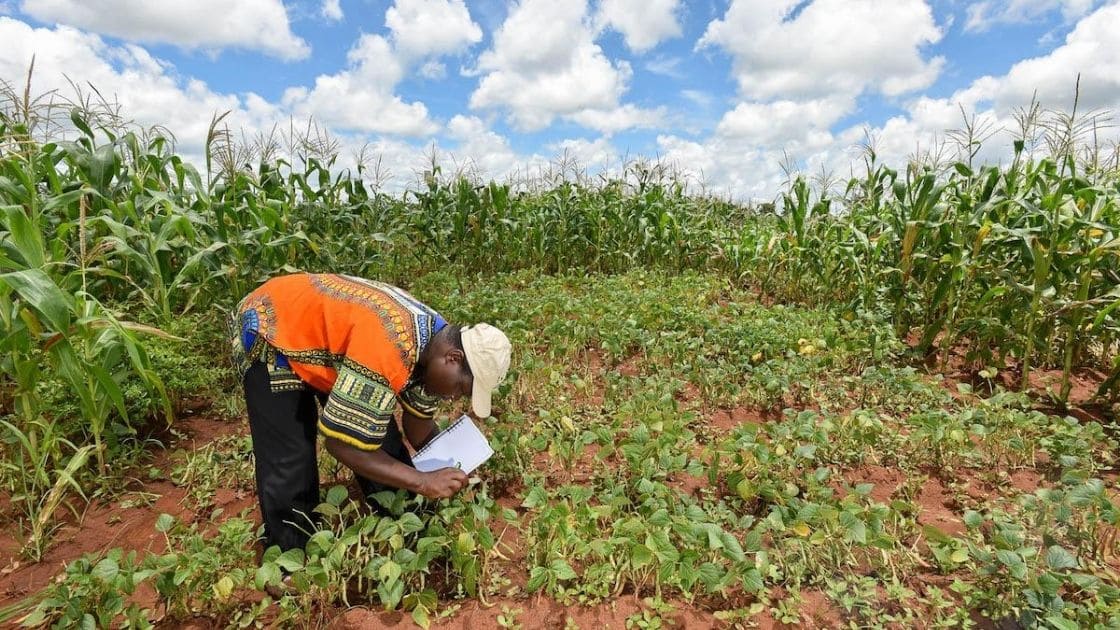
When drought caused devastating crop losses in Malawi in 2015-2016, farmers in the south eastern African nation did not initially fear for the worst: the government had purchased insurance for such a calamity. But millions of farmers remained unpaid for months because the insurer’s model failed to detect the extent of the losses, and a subsequent model audit moved slowly. Quicker payments would have greatly reduced the shockwaves that rippled across the landlocked country.
While the insurers fixed the issues resulting in that error, the incident remains a cautionary tale about the potential failures of agricultural index insurance, which seeks to help protect the livelihoods of millions of smallholder farmers across the globe. Recent advances in crop modeling and remote sensing especially in the availability and use of high-resolution imagery from satellites that can pinpoint individual fields is one tool insurers that can help improve the quality of index insurance for farmers, report a team of economists and earth system scientists this week in Nature Reviews Earth & Environment. “The enthusiasm for agricultural insurance needs to be matched with an equally well-founded concern for making sure that novel insurance products perform and help, not hurt, farmers exposed to severe risk,” said Elinor Benami, the lead social scientist of the review.
The review was co-led by Benami, an assistant professor in Agricultural and Applied Economics from Virginia Tech, and Zhenong Jin, an assistant professor of Digital Agriculture at the University of Minnesota, and included Aniruddha Ghosh from the Alliance of Biodiversity International and CIAT. The authors outline opportunities for enhancing the quality of index insurance programs to increase the value that index insurance programs offer to agricultural households and communities.
“Improvements in earth observation are enabling new approaches to assess agricultural losses, such as those resulting from adverse weather,” said Zhenong.
Index insurance in agriculture triggers payments when certain environmental conditions—seasonal rainfall, for example—stray from thresholds for a typical harvest. Unlike policies that require costly and time-consuming field visits to assess claims, index insurance uses an indicator of losses to cover a group of farmers within a given geographical area. This approach offers the promise of inexpensive, quick coverage to many people who would otherwise be uninsured.
Lack of other types of coverage is due, in part, to the cost involved in verifying small claims on the ground. As the Malawi case shows, verification is also an issue for index insurance but its potential for scale, speed, and low cost renders it viable for both insurers and desirable for farmers. When well matched to local experiences, index insurance can have meaningful impacts on agricultural livelihoods. One study cited by the authors found that people insured under a Kenyan index insurance program reduced their “painful coping strategies” by 40-80% when compared to uninsured households.