

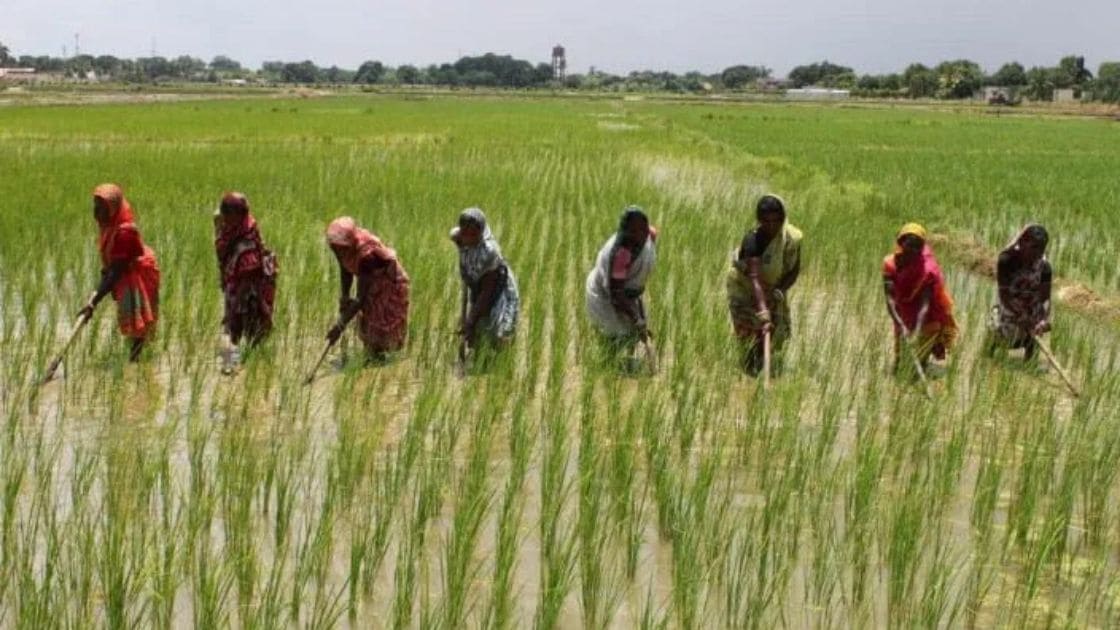
The project was implemented by International Rice Research Institute (IRRI), with support from the Odisha’s Department of Agriculture and Farmers’ Empowerment (DA&FE).
Women and marginal farmers in Odisha improved their productivity after adopting climate-resilient agricultural practices and technologies, as part of the five-year project to build resilience of poor, small, and marginal farmers. The project was implemented by the India chapter of the Philippine-based International Rice Research Institute (IRRI), with support from the Odisha’s Department of Agriculture and Farmers’ Empowerment (DA&FE). IRRI representatives presented the results of the project titled “Increasing Productivity of Rice-based Cropping Systems and Farmers’ Income in Odisha” in a workshop organised at Krushi Bhavan, Bhubaneswar recently. The event saw the participation of senior officials from DA&FE, including Sanjeev Chadha, Special Secretary, DA&FE and Madhusmita Sahoo, PD-OIIPCRA, DoWR. Smallholder farmers account for nearly 93 per cent of the total farm population while women account for nearly half of the agricultural labour force in Odisha. This coastal state in the eastern part of India has historically been highly prone to climate-induced natural disasters, such as droughts and floods, rendering the small and marginal farmers, and women highly vulnerable.
Brining in climate-resilient agricultural practices
Through the project, researchers and extension workers introduced innovative methods that helped increase farmers’ awareness of climate-resilient rice varieties that have better tolerance to drought, floods, and common pests and diseases than popularly grown varieties. They also provided the farmers access to good quality seeds and capacity-building opportunities in quality seed production. Climate-smart management practices that helped farmers improve their crop productivity were also introduced. In turn, increased awareness shot up the demand for climate-resilient rice varieties, such as Sahbhagi dhan, Swarna Shreya, Bina dhan 11, and Swarna sub-1. The inclusion of these varieties in the seed chain allowed farmers to adopt new rice varieties and replace old seeds. Close to 60,000 farmers benefited from access to new varieties and seeds during 2016-2020. More than a quarter of these farmers are women. Under the climate-resilient agricultural practices, 20 stress-tolerant rice varieties (STRVs) were introduced and tested for potential yield advantage over their local check, with seeds of seven new varieties currently being multiplied and distributed across the state. In the project, researchers demonstrated the yield gain through head-to-head trials of recently released, early-duration, high-yielding, and disease-resistant varieties of green gram and black gram cultivated in lands left fallow after the Kharif rice.
Nature-friendly management practices to support sustainable agriculture were a central part of the project. For example, seed treatment with Trichoderma atroviride (under Integrated Pest Management) helped farmers protect their crops from pests and diseases, minimising the need for pesticides.