

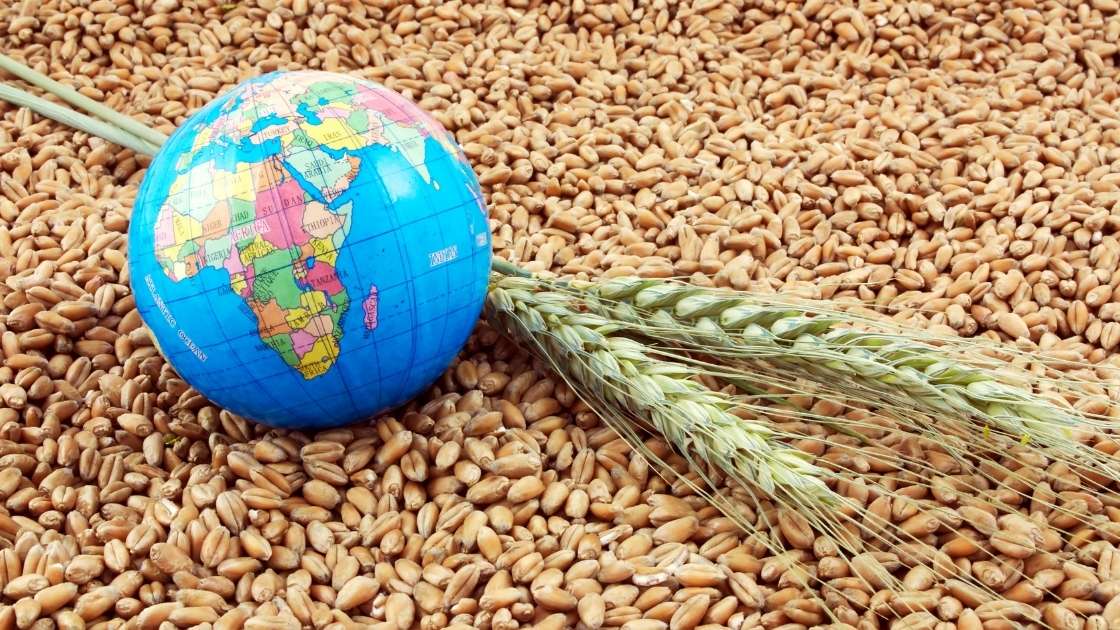
Humanity will seek more food from less land and water resources in the next decades. The impact of four alternative development scenarios from the Millennium Ecosystem Assessment and the Special Report on Emission Scenarios on food production is quantified in this study.
Land and water supply implications from population increase and technological advancement, as well as forest and agricultural commodity demand shifts from population growth and economic development, are all partially and jointly considered. The effects of income on food demand are calculated using dynamic elasticities.
Simulations of the agricultural and forest sectors using a global partial equilibrium model demonstrate that per capita food levels rise in all development scenarios studied, with little effects on food prices. Between 2010 and 2030, global agricultural land could rise by up to 14%. Deforestation limitations have a significant impact on the price of land and water resources but have little impact on world food output and prices.
While anticipated income changes have the greatest partial impact on per capita food consumption, population expansion has the greatest impact on overall food production. Adaptations in land management intensities amplify or lessen the impact of technical change. Land and water are both necessary resources for the production of food, making them two of humanity’s most basic resources.
Population increase, economic development, and environmental change are all putting strain on these resources. In essence, farmers of the future will have to produce more food with fewer resources. Beyond meeting market demands, global food production is linked to a number of important societal goals, including reducing malnutrition and poverty, improving access to a healthy diet, better management and allocation of freshwater resources, increased use of renewable energy, and climate, ecosystem, and biological diversity protection. As a result, insights regarding the agriculture sector’s future development are of significant interest to society and politicians. Integrated scientific model-based assessments are required to effectively represent the complex linkages between food production and overall development.
A variety of past studies have examined the impacts of global development on food production. These studies involve a wide spectrum of scientific disciplines, methods, models, and data. Geographic and biophysical assessments often focus on the heterogeneity of production conditions and their consequences. Engineering assessments in the land-use sector deal primarily with technological development and associated opportunities. Economic assessments attend to farm level and/or commodity market implications of development.
In addition, there are policy-oriented assessments that examine legal instruments and challenges for the regulation of land use and land use externalities. Integrated assessment studies are studies that incorporate the economic, technological, biophysical, and legal aspects of agricultural development (e.g., Bouwman et al., 2006, Rosegrant et al., 2002a, Rosegrant et al., 2002b, Rosenzweig et al., 2004). These studies, which are generally extensive, are able to measure the net consequences of development across a varied collection of distinct causes, which is a significant improvement above single-factor research.
In terms of development, the integrated studies try to depict economic development, population expansion, technological progress, environmental change, and potential policy paths all at the same time. Integrated assessments, on the other hand, are only useful if the results can be properly comprehended, interpreted, and compared to other studies. Different research that produces the same aggregated results but differs considerably in individual components do not boost scientific judgments and modeling confidence.
Created By: KETAN TANDON