

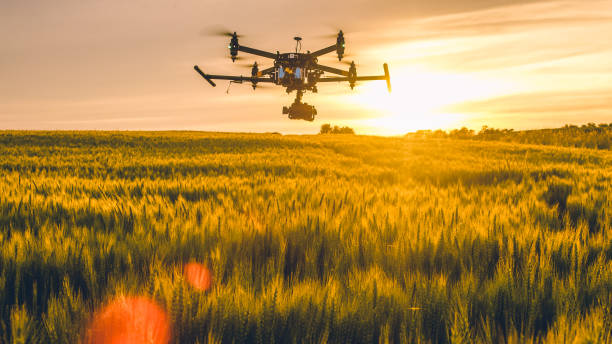
A recent report from Goldman Sachs pegs the Precision Farming domain to around $240 billion. A lot of tech firms and startups have begun to explore this business opportunity as the next big area of growth. There is an enormous opportunity to apply Artificial intelligence (Al), Machine learning (ML), Drone technology, Internet of things (1oT) and robotics to Precision Agriculture.
Suresh Reddy
Innovations always chase the most acute problems in the world. It can’t get bigger than ensuring the people of the entire planet are well fed.
- Thomas Malthus, an 18th-century scholar and cleric, argued that as population growth is exponential while food growth is linear, there will be an inevitable. food shortage at some point in time. His theory creating some fear in the global community. Humanity and the financial incentives have always disproved Malthus by coming up with up new ways to generate more food supply. Surely the modern day doomsters are wrong again. However, their diagnosis of the problem is right the world faces a substantial challenge to feed itself in the face of an expanding population.
Mankind continues to be super creative in being prepared for any upcoming food shortages all through history like introducing steel plough and reaper in the 1800s to modern day advances like trickle irrigation, genetically modified seeds and such to feed the world’s growing population. We are expected to reach 9.6 billion people by the year 2050, and food production must increase by 70 percent from current levels to feed every month. Unlike in the past when demand growth was met by increasing acres of land to be cultivated, the FAO estimates a modest 4 per cent increase in available acreage over the next 35 years. So, the next 70 per cent food production growth has to come from improving yield per acre.
This is the fourth revolution in agriculture, triggered by a huge increase in the use of technology in farming. Concepts such as autonomous vehicles, planting robots, drones, and logistics management systems are taking farming to another level.
Autonomous vehicles have been developed for farming purposes, such as planting, mechanical weeding, application of fertilizer, or harvesting of fruits. Drones have started to monitor the crops to provide sophisticated farm advice. On top of this, it allows farmers to differentiate between plant diseases based on high-resolution images shot by them. Virtual fence technologies allow cattle management based on remote sensors attached to the livestock. One can put a network of sensors that allow continuous monitoring of the farm. Similarly, technology to track the changing states of the plants, animals and soils can provide input to automated systems that dispense water, fertilizer, and medications on the fly, making the farming practice ultra-efficient.
Precision farming can make agriculture more profitable for the farmer. Due to the reliability of the data and systems, the farmer’s risk will drop significantly and save money on labor costs. Accurate local weather forecasts, disease and disaster predictions that are backed by a dense network of weather and climate data will allow for the optimal cultivation of crops. A recent report from
Goldman Sachs pegs the Precision Farming domain to around $240 billion. A lot of tech firms and startups have begun to explore this business opportunity as the next big area of growth. There is an enormous opportunity to apply artificial intelligence (AI), machine learning (ML), drone technology, Internet of things (IoT) and robotics to Precision Agriculture. While all these developments are hunky-dory, some hurdles still need to be overcome. Details such as who will own the data generated and smart systems that record the input of resources and the output of products do raise questions of property rights and use of data. Governments must establish a regulatory architecture that guarantees high-quality data while at the same time fostering trust among all players involved. High costs to adopt technology for individual farms and limited knowledge can be significant adoption hurdles, especially in countries like India.
Created By: HARSHUL DHAWAN