

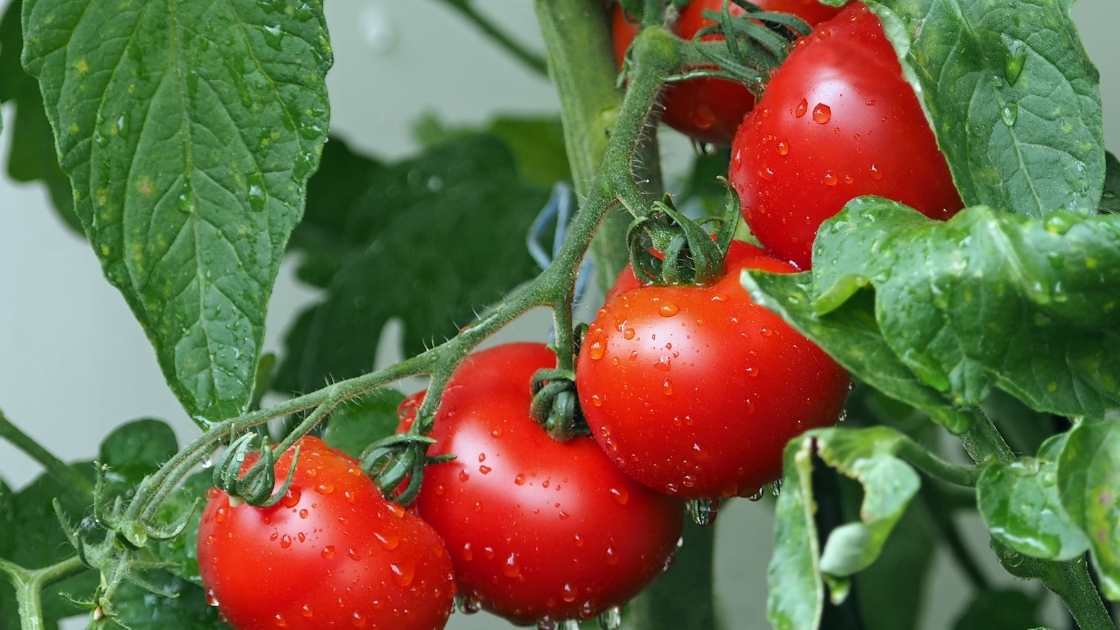
To keep prices from rising during the lean season, the government should establish ways to incentivize tomato and onion production, according to the Economic Survey released on Monday.
Seasonal and shock factors contribute to price surges in tomatoes and onions, according to the report.
The results of the survey show that “Seasonality in prices as a result of seasonal production patterns need government intervention. During the lean season, strategies to encourage production should be designed”.
In addition, the government should encourage investments in surplus tomato processing and onion processing and storage infrastructure, according to the report.
Cutting production waste and improving supply chain management will also aid in meeting demand, according to the report.
The survey also mentioned that the seasonal components tend to put upward pressure on prices of tomato from July to November every year and upward pressure remain highest in July.
On the other hand, the seasonal factor puts the largest downward pressure on prices in March. This seasonality in prices results from the seasonal pattern of production of tomatoes, as about 70 per cent of the tomato production takes place during the rabi season.
Kharif production during July-November usually contributes less than 30 per cent of the total tomato production in a year. This variation in supply puts upward pressure on tomato prices every year during July-November, it added.
“If there were no irregular shocks, then seasonality would have caused tomato prices to be around Rs 15 per kg higher in July 2021 over March 2021 compared to the long-term trend,” it said.
The Survey said onion transplanted in December-January of the rabi season and harvested in end-March to May accounts for about 70 per cent of total onion production in a year. The seasonal component is found to put downward pressure on prices coinciding with the rabi harvest period, and upward pressure in other months, reaching a peak in December, it noted. The other two production seasons –kharif (transplantation in July-August and harvesting in October-December) and late kharif (transplantation in October-November and harvest in January-March) – face supply deficit, it added.
However, the Survey said, the government is implementing various measures to overcome these challenges.
The Mission for Integrated Development of Horticulture (MIDH) envisages holistic development of horticulture and provides assistance at 50 per cent of the total cost of Rs 1.75 lakh per unit for a low-cost onion storage structure, having a capacity of 25 tonnes each.
The government also procures onions directly from farmers at farm gate prices for the buffer. Schemes like Agricultural Marketing Infrastructure (AMI) for rural godowns enables small farmers to enhance their holding capacity to sell their produce at remunerative prices and avoid distress sale.
Another scheme Operation Greens for the integrated development of tomato, onion and potato (TOP) value chain is also being implemented and it provides a 50 per cent subsidy for the transportation and storage from surplus producing areas to consuming centres.
Kisan Rail service was also launched on August 7, 2020, to enable speedy movement of perishables – including fruits, vegetables, meat, poultry, fishery and dairy products — from the production or surplus regions to consumption or deficient regions, the survey added.