

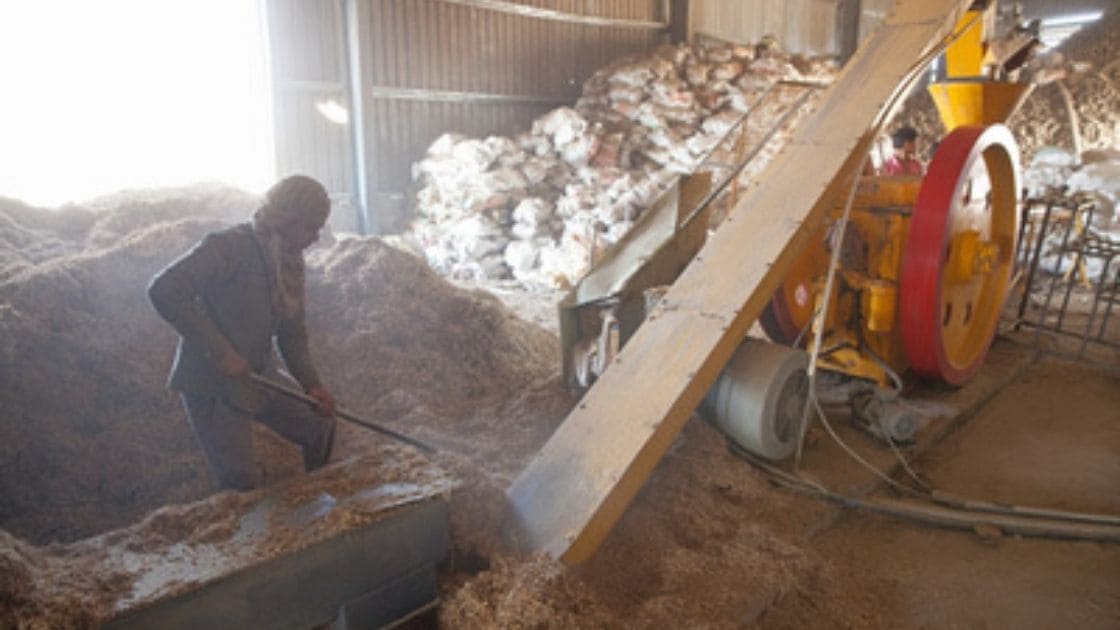
Cotton industry officials from Africa visit India to see how entrepreneurs are turning unused parts of the crop into renewable energy for businesses and extra income for farmers.
Suffocating smoke engulfs parts of India in autumn as farmers burn fields to clear harvest leftovers deemed worthless, such as cotton stalks. So common is the practice that on some days agricultural fires contribute to about half of Delhi’s deadly pollution, according to researchers from the Harvard John A. Paulson School of Engineering and Applied Sciences.
But the unwanted parts of the cotton plant going up in smoke could instead be sold as clean fuel – in the form of briquettes or pellets – to replace coal and wood in boilers and heaters.
“These cotton by-products can boost farmers’ incomes and help reverse the impact that burning agricultural waste has on the environment and public health,” says Pamela Coke-Hamilton, who heads UNCTAD division on trade and commodities.